




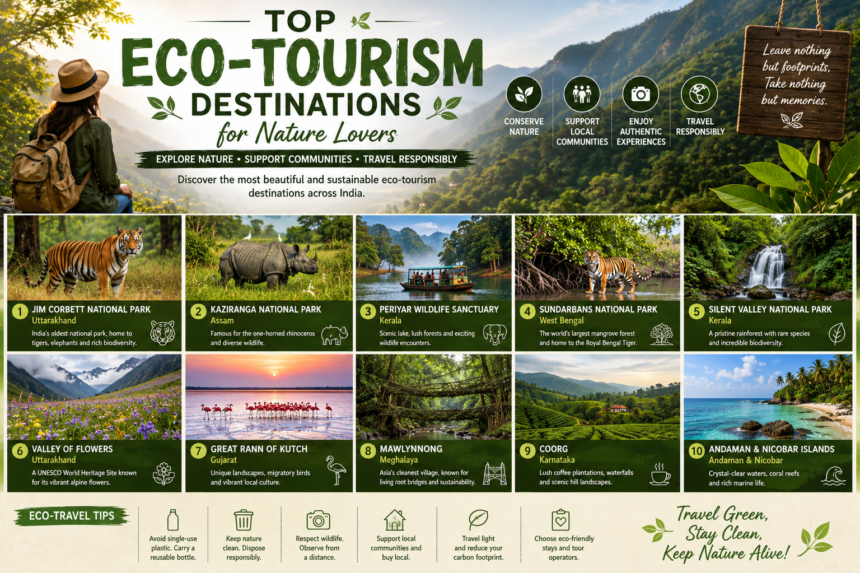
As travelers become more conscious of their environmental impact, eco-tourism has emerged as one of the most rewarding ways to explore the world. It combines adventure, conservation, and cultural appreciation while promoting sustainable travel practices that protect natural habitats and support local communities.
India, with its incredible biodiversity and diverse landscapes, offers countless eco-tourism destinations—from dense forests and snow-capped mountains to pristine beaches, wetlands, and wildlife reserves. Whether you’re a wildlife enthusiast, bird watcher, photographer, or simply someone seeking peace in nature, these destinations promise unforgettable experiences while encouraging responsible tourism.
What is Eco-Tourism?
Eco-tourism is responsible travel to natural areas that:
- Conserves the environment
- Supports local communities
- Promotes wildlife protection
- Encourages sustainable practices
- Minimizes environmental impact
- Educates travelers about nature and conservation
Choosing eco-friendly destinations helps preserve the beauty of our planet for future generations.
1. Jim Corbett National Park, Uttarakhand
India’s oldest national park is a paradise for wildlife lovers. Nestled in the Himalayan foothills, Jim Corbett is famous for its Bengal tigers, elephants, rich birdlife, and lush forests.
Top Experiences
- Jeep safaris
- Bird watching
- Nature photography
- Riverside stays
- Forest walks
Best Time to Visit: November to June
2. Kaziranga National Park, Assam
A UNESCO World Heritage Site, Kaziranga is home to the world’s largest population of the endangered one-horned rhinoceros.
Highlights
- Rhino safaris
- Elephant rides
- Wetland bird watching
- Jeep safaris
- Tea garden visits
Best Time: November to April
3. Periyar Wildlife Sanctuary, Kerala
Located in the Western Ghats, Periyar is renowned for its scenic lake, dense forests, and abundant wildlife.
Activities
- Bamboo rafting
- Boat safaris
- Guided nature walks
- Spice plantation tours
- Eco-lodges
4. Sundarbans National Park, West Bengal
The world’s largest mangrove forest is a unique ecosystem where the mighty Royal Bengal Tiger thrives alongside crocodiles, dolphins, and hundreds of bird species.
Don’t Miss
- Mangrove boat cruises
- Wildlife spotting
- Village eco-tours
- Bird photography
5. Silent Valley National Park, Kerala
One of India’s most untouched rainforests, Silent Valley protects numerous rare and endemic species.
Why Visit?
- Dense tropical forests
- Rare wildlife
- Butterfly species
- Guided eco-trails
- Rich biodiversity
6. Valley of Flowers National Park, Uttarakhand
This UNESCO World Heritage Site transforms into a colorful paradise every monsoon, with thousands of alpine flowers blooming across the Himalayan landscape.
Highlights
- Flower-covered meadows
- Himalayan trekking
- Rare plant species
- Photography
- Mountain scenery
Best Time: July to September
7. Great Rann of Kutch, Gujarat
Beyond its famous white salt desert, the Rann of Kutch supports unique ecosystems and migratory birds while promoting community-based tourism.
Attractions
- Flamingo colonies
- White Desert
- Traditional Kutchi villages
- Local handicrafts
- Desert camping
8. Mawlynnong, Meghalaya
Known as the “Cleanest Village in Asia,” Mawlynnong is an inspiring example of sustainable tourism and community-led conservation.
Things to Experience
- Living root bridges
- Bamboo skywalk
- Village walks
- Organic farming
- Local cuisine
9. Coorg, Karnataka
Often called the “Scotland of India,” Coorg combines lush coffee plantations, forests, waterfalls, and wildlife with eco-friendly homestays.
Popular Activities
- Plantation tours
- Bird watching
- Waterfall visits
- Trekking
- Coffee tasting
10. Andaman & Nicobar Islands
These tropical islands offer crystal-clear waters, coral reefs, and marine biodiversity, making them perfect for sustainable marine tourism.
Activities
- Snorkeling
- Scuba diving
- Glass-bottom boat rides
- Mangrove kayaking
- Beach clean-up initiatives
Wildlife You May Encounter
India’s eco-tourism destinations are home to an astonishing variety of wildlife, including:
- Bengal Tigers
- Asian Elephants
- One-Horned Rhinoceroses
- Snow Leopards
- Leopards
- Indian Bison (Gaur)
- Crocodiles
- Dolphins
- Hornbills
- Flamingos
- Himalayan Monals
- Butterflies and exotic insects
Always observe wildlife from a safe distance and avoid disturbing their natural habitats.
Best Time for Eco-Tourism
October to March
Ideal for wildlife safaris, bird watching, and forest adventures.
July to September
Perfect for visiting lush landscapes like the Valley of Flowers, Western Ghats, and waterfalls during the monsoon.
Eco-Friendly Travel Tips
Help protect nature by following these sustainable travel practices:
- Carry reusable water bottles and shopping bags.
- Avoid single-use plastics.
- Stay in eco-certified accommodations.
- Respect wildlife and maintain a safe distance.
- Stay on designated trails during hikes.
- Do not feed wild animals.
- Dispose of waste responsibly.
- Support local artisans and businesses.
- Use refillable toiletries whenever possible.
Sustainable Accommodation Options
Consider staying at:
- Eco-lodges
- Forest cottages
- Nature camps
- Sustainable resorts
- Organic farm stays
- Community-run homestays
These accommodations often contribute directly to conservation efforts and local livelihoods.
Photography Tips for Nature Lovers
Capture nature responsibly by:
- Using natural light
- Avoiding flash photography around wildlife
- Maintaining silence during wildlife sightings
- Carrying a zoom lens instead of approaching animals
- Respecting photography restrictions in protected areas
Remember, the well-being of wildlife always comes before the perfect photograph.
Why Eco-Tourism Matters
Eco-tourism is more than just visiting beautiful places—it helps preserve ecosystems, protects endangered species, creates employment for local communities, and raises awareness about environmental conservation. By choosing responsible travel, every visitor becomes a partner in safeguarding India’s extraordinary natural heritage.
Final Thoughts
India’s eco-tourism destinations showcase the country’s incredible natural diversity, offering experiences that are both inspiring and environmentally responsible. From tracking rhinos in Kaziranga and spotting tigers in Jim Corbett to trekking through the Valley of Flowers and exploring the pristine mangroves of the Sundarbans, each destination highlights the importance of conserving our planet’s precious ecosystems.
As you plan your next adventure, consider choosing eco-friendly destinations that allow you to connect with nature while leaving a positive impact on the environment and local communities. Travel responsibly, tread lightly, and help preserve these natural treasures for generations to come.