




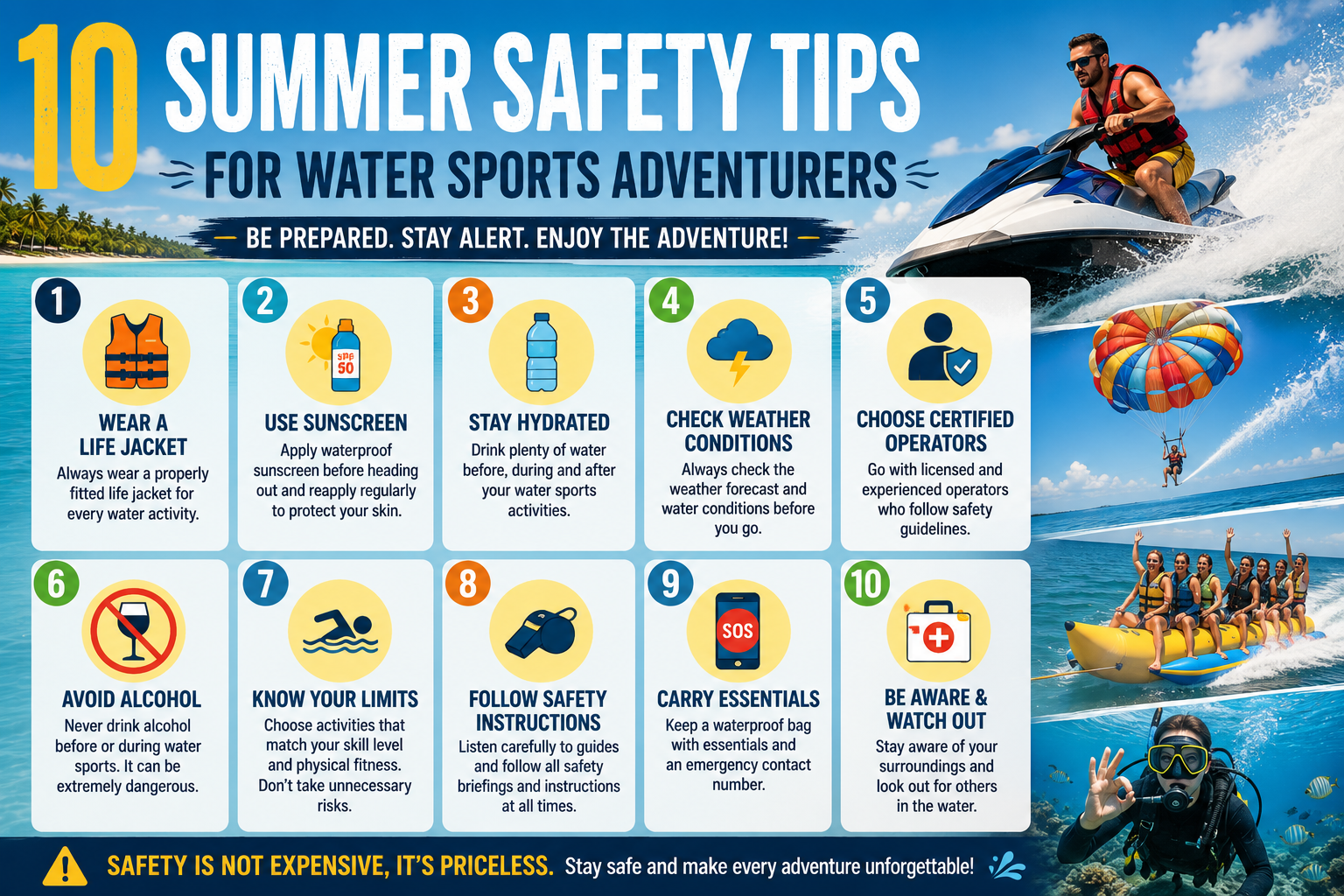
Summer is the perfect season to enjoy thrilling water sports, from jet skiing and parasailing to scuba diving, kayaking, surfing, and banana boat rides. Whether you’re heading to the beaches of Goa, the backwaters of Kerala, or the crystal-clear waters of the Andaman Islands, water adventures offer unforgettable experiences.
- 1. Always Wear a Proper Life Jacket
- 2. Check the Weather Before You Go
- 3. Stay Hydrated Throughout the Day
- 4. Apply Waterproof Sunscreen
- 5. Choose Certified Water Sports Operators
- 6. Know Your Skill Level
- 7. Follow Every Safety Instruction
- 8. Avoid Alcohol Before Water Activities
- 9. Carry Essential Safety Items
- 10. Respect Nature and Local Rules
However, fun on the water also comes with risks. Strong currents, dehydration, sun exposure, and unpredictable weather can quickly turn an exciting outing into an emergency. Following basic safety guidelines can help you stay protected while making the most of your adventure.
Here are ten essential summer safety tips every water sports enthusiast should know.
1. Always Wear a Proper Life Jacket
A life jacket is your most important piece of safety equipment. Even if you’re an experienced swimmer, unexpected situations such as strong currents, high waves, or equipment failure can occur.
Make sure your life jacket:
- Fits properly
- Is securely fastened
- Is approved by the activity operator
- Matches your size and weight
Never remove it while participating in water sports.
2. Check the Weather Before You Go
Weather conditions can change rapidly near beaches, lakes, and rivers.
Before heading out:
- Check weather forecasts.
- Avoid activities during thunderstorms.
- Be cautious of strong winds.
- Follow local weather advisories.
- Listen to lifeguards and instructors.
If conditions look unsafe, postpone your adventure.
3. Stay Hydrated Throughout the Day
Many people underestimate how quickly dehydration can occur during outdoor activities.
Drink plenty of water:
- Before your activity
- During breaks
- After finishing
Avoid excessive caffeine and sugary drinks, which may contribute to dehydration.
4. Apply Waterproof Sunscreen
Long hours under the summer sun increase the risk of sunburn and heat-related illnesses.
Protect your skin by:
- Using broad-spectrum SPF 30 or higher.
- Applying sunscreen 20–30 minutes before entering the water.
- Reapplying every two hours or after prolonged water exposure.
- Wearing UV-protective clothing whenever possible.
Don’t forget your ears, neck, and feet—these areas are often overlooked.
5. Choose Certified Water Sports Operators
Your safety depends greatly on the quality of the operator.
Before booking:
- Check reviews.
- Verify licenses or certifications.
- Ensure equipment is well maintained.
- Confirm that trained instructors are present.
- Ask about emergency procedures.
Avoid operators who skip safety briefings or provide damaged equipment.
6. Know Your Skill Level
Water sports should match your experience and physical fitness.
If you’re a beginner:
- Start with guided activities.
- Take professional lessons.
- Avoid advanced sports without training.
- Don’t feel pressured to attempt risky maneuvers.
Confidence grows with practice, not unnecessary risks.
7. Follow Every Safety Instruction
Instructors provide safety briefings for a reason.
Pay close attention to:
- Equipment usage
- Emergency signals
- Rescue procedures
- Operating limits
- Safe riding distances
Following instructions significantly reduces the chances of accidents.
8. Avoid Alcohol Before Water Activities
Alcohol impairs judgment, slows reaction time, and affects balance—making water sports much more dangerous.
Wait until you’ve completed all activities before enjoying alcoholic beverages.
A clear mind is essential when operating or participating in any water-based adventure.
9. Carry Essential Safety Items
Even short adventures should include basic safety essentials.
Recommended items include:
- Waterproof phone pouch
- Drinking water
- Small first-aid kit
- Sunglasses with UV protection
- Waterproof bag
- Emergency contact information
- Power bank for longer excursions
Preparation can make a significant difference in unexpected situations.
10. Respect Nature and Local Rules
The ocean, rivers, and lakes are beautiful but unpredictable.
Always:
- Stay within designated activity zones.
- Avoid restricted areas.
- Respect marine life.
- Never litter.
- Follow lifeguard instructions.
- Keep a safe distance from boats and other participants.
Responsible tourism helps protect natural ecosystems while ensuring everyone can enjoy them safely.
Best Water Sports Destinations in India
If you’re planning your next adventure, these destinations offer excellent opportunities for water sports:
Goa
- Jet skiing
- Parasailing
- Banana boat rides
- Speed boating
Andaman & Nicobar Islands
- Scuba diving
- Snorkelling
- Sea walking
- Kayaking
Rishikesh, Uttarakhand
- White-water rafting
- Kayaking
Kerala
- Canoeing
- Backwater kayaking
- Houseboat cruises
Lakshadweep
- Snorkelling
- Scuba diving
- Glass-bottom boat rides
Common Mistakes to Avoid
Many accidents happen because travellers overlook simple precautions.
Avoid these common mistakes:
- Ignoring weather warnings
- Not wearing a life jacket
- Skipping the safety briefing
- Using damaged equipment
- Swimming alone
- Overestimating your abilities
- Staying in the sun too long
- Failing to drink enough water
Small precautions can prevent major problems.
Final Thoughts
Water sports are one of the best ways to enjoy summer, offering excitement, adventure, and unforgettable memories. Whether you’re gliding across the waves on a jet ski, exploring vibrant coral reefs, or paddling through peaceful backwaters, safety should always come first.
By wearing proper safety gear, choosing trusted operators, staying hydrated, respecting local guidelines, and being mindful of weather conditions, you can reduce risks and focus on what truly matters—enjoying every moment of your adventure.
Plan wisely, stay alert, and let every splash become a memory worth remembering.
Adventure is more enjoyable when safety comes first.