


India is home to some of the world’s most remarkable wildlife, and among its most unique conservation success stories is the Gharial Sanctuary. Dedicated to protecting the critically endangered gharial (Gavialis gangeticus), these sanctuaries preserve one of the oldest surviving reptile species on Earth. Known for its long, slender snout and fish-eating habits, the gharial is a fascinating creature found mainly in India’s freshwater rivers.
For wildlife enthusiasts, birdwatchers, photographers, and nature lovers, a visit to a Gharial Sanctuary offers an unforgettable experience amidst pristine river ecosystems.
What is a Gharial?
The gharial is one of the world’s most distinctive crocodilian species. Unlike crocodiles and alligators, it has a long, narrow snout filled with sharp teeth perfectly adapted for catching fish. Adult males develop a rounded bulb-like growth at the tip of the snout called a “ghara,” from which the species gets its name.
Today, gharials are classified as Critically Endangered, making conservation efforts vital for their survival.
National Chambal Sanctuary – India’s Most Famous Gharial Sanctuary
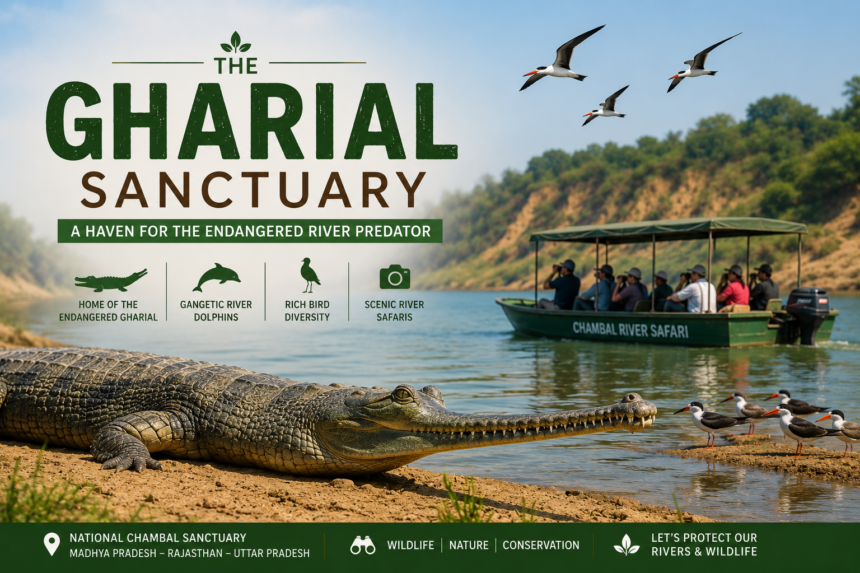
The National Chambal Sanctuary is India’s best-known protected habitat for gharials. Stretching across Madhya Pradesh, Rajasthan, and Uttar Pradesh, the sanctuary follows the pristine Chambal River and serves as one of the world’s most important breeding grounds for the species.
The sanctuary is also recognized for its clean river ecosystem and remarkable biodiversity.
Wildlife You Can Spot
Apart from gharials, visitors may encounter:
- Mugger crocodiles
- Gangetic river dolphins
- Smooth-coated otters
- Indian skimmers
- Black-bellied terns
- Sarus cranes
- Turtles
- Marsh crocodiles
- Migratory birds
- Nilgai
- Jackals
- Wild boars
The sanctuary is a paradise for wildlife photographers and birdwatchers.
River Safari Experience
One of the highlights of visiting the sanctuary is a boat safari along the Chambal River.
During the safari, visitors can:
- Observe gharials basking on sandy riverbanks.
- Spot Gangetic river dolphins surfacing in the water.
- Watch rare migratory birds.
- Photograph untouched river landscapes.
- Learn about conservation efforts from experienced guides.
The calm waters and peaceful surroundings create an unforgettable nature experience.
Why the Sanctuary is Important
The Gharial Sanctuary plays a crucial role in:
- Protecting endangered gharials.
- Conserving freshwater biodiversity.
- Preserving the Chambal River ecosystem.
- Supporting scientific research.
- Promoting eco-tourism.
- Raising awareness about wildlife conservation.
Captive breeding and reintroduction programs have significantly contributed to increasing gharial populations in protected river systems.
Best Time to Visit
The ideal time to explore the sanctuary is between October and March, when the weather is pleasant and wildlife sightings are at their best.
- Winter (October–March): Best for boat safaris and birdwatching.
- Summer (April–June): Good for spotting basking reptiles, though temperatures can be high.
- Monsoon (July–September): River levels rise, and some safari activities may be restricted.
Photography Opportunities
Nature photographers will find countless opportunities to capture:
- Gharials basking in the sun.
- River dolphins.
- Rare migratory birds.
- Sunrise and sunset over the Chambal River.
- Sandbanks and untouched landscapes.
- Local fishing communities.
- Riverine wildlife in their natural habitat.
Early mornings and late afternoons provide the best lighting.
How to Reach
The sanctuary can be accessed from several nearby towns.
Nearest Airports:
- Gwalior
- Agra
- Jaipur
Nearest Railway Stations:
- Morena
- Dholpur
- Agra
- Gwalior
Road connectivity from these cities makes reaching various entry points to the sanctuary convenient.
Travel Tips
- Book boat safaris through authorized operators.
- Carry binoculars for birdwatching.
- Wear neutral-colored clothing to avoid disturbing wildlife.
- Maintain silence during safari excursions.
- Carry sunscreen, a hat, and drinking water.
- Never feed or disturb wild animals.
- Follow the instructions of forest guides and park authorities.
Responsible Tourism
Visitors play an important role in protecting this fragile ecosystem.
Remember to:
- Avoid littering.
- Do not use plastic near the river.
- Respect wildlife and maintain a safe distance.
- Support local eco-tourism initiatives.
- Choose certified guides and operators.
Responsible travel helps ensure the long-term survival of the sanctuary and its unique inhabitants.
Final Thoughts
The Gharial Sanctuary is one of India’s finest examples of wildlife conservation and river ecosystem preservation. From spotting the rare gharial and Gangetic river dolphin to enjoying peaceful boat safaris through one of the country’s cleanest rivers, every visit offers a unique connection with nature.
Whether you’re a wildlife photographer, conservation enthusiast, birdwatcher, or traveler seeking offbeat destinations, the Gharial Sanctuary promises an educational and memorable adventure. Add this remarkable sanctuary to your travel bucket list and witness one of India’s greatest conservation treasures firsthand.