


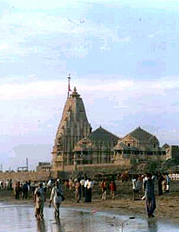
The Somnath Temple, located in Prabhas Patan near Veraval in Gujarat, is one of India’s most revered Hindu temples and an important pilgrimage destination. Dedicated to Lord Shiva, the temple is traditionally regarded as the first among the twelve sacred Jyotirlingas.
Standing beside the Arabian Sea, Somnath combines deep spiritual significance with striking architecture and a dramatic coastal setting.
A Temple with Ancient Roots
Somnath has a long and fascinating history. According to Hindu tradition, the temple has been rebuilt several times over the centuries following periods of destruction and reconstruction.
The present temple is associated with the reconstruction movement of modern India and was rebuilt in the Chaulukya style of temple architecture. The new temple was consecrated in the early 1950s, symbolizing the revival of one of India’s most important sacred sites.
The Legend of Somnath
According to Hindu mythology, the Moon God, Chandra, was married to the daughters of Daksha Prajapati. Chandra was particularly devoted to Rohini, which angered Daksha. As a result, Chandra was cursed to lose his radiance.
Chandra is believed to have worshipped Lord Shiva at Prabhas Patan and received his blessing, allowing him to regain his brilliance. The legend is traditionally associated with the name Somnath, meaning “Lord of the Moon.”
Magnificent Architecture
The present Somnath Temple showcases the distinctive Chaulukya architectural tradition. Its towering shikhara rises prominently above the coastline, while intricate stonework and sculptural details decorate the temple complex.
The temple’s location makes it especially spectacular. From the surrounding area, visitors can see the Arabian Sea stretching toward the horizon, creating a memorable combination of spirituality and natural beauty.
The Sacred Jyotirlinga
The central shrine houses the sacred Somnath Jyotirlinga, which attracts devotees throughout the year. Pilgrims visit the temple to offer prayers and seek the blessings of Lord Shiva.
The temple is especially vibrant during festivals such as Mahashivratri, when large numbers of devotees gather for special prayers and religious ceremonies.
Historical Significance
Somnath’s history is closely connected with the political and cultural history of western India. The temple experienced repeated destruction and reconstruction over many centuries.
Its repeated rebuilding has given Somnath a powerful symbolic importance. For many visitors, the temple represents the endurance of faith and the ability of India’s cultural traditions to survive periods of upheaval.
Nearby Attractions
A visit to Somnath can be combined with several attractions around Prabhas Patan and Veraval. Bhalka Tirth, associated with traditions surrounding the final earthly journey of Lord Krishna, is an important pilgrimage site nearby.
Visitors can also explore the Triveni Sangam, where three rivers are traditionally believed to meet, and enjoy the scenic coastline around Somnath.
Best Time to Visit
The best time to visit Somnath is generally between October and March, when the weather is more comfortable for sightseeing and pilgrimage.
Mahashivratri is a particularly significant period for devotees, although visitors should expect larger crowds during major festivals.
A Timeless Symbol of Devotion
The Somnath Temple is much more than an architectural landmark. Its legends, spiritual significance, dramatic history, and coastal setting have made it one of India’s most celebrated pilgrimage destinations.
Whether visiting as a pilgrim, history enthusiast, architecture lover, or traveler exploring Gujarat, Somnath offers a profound experience of India’s enduring spiritual and cultural heritage.