



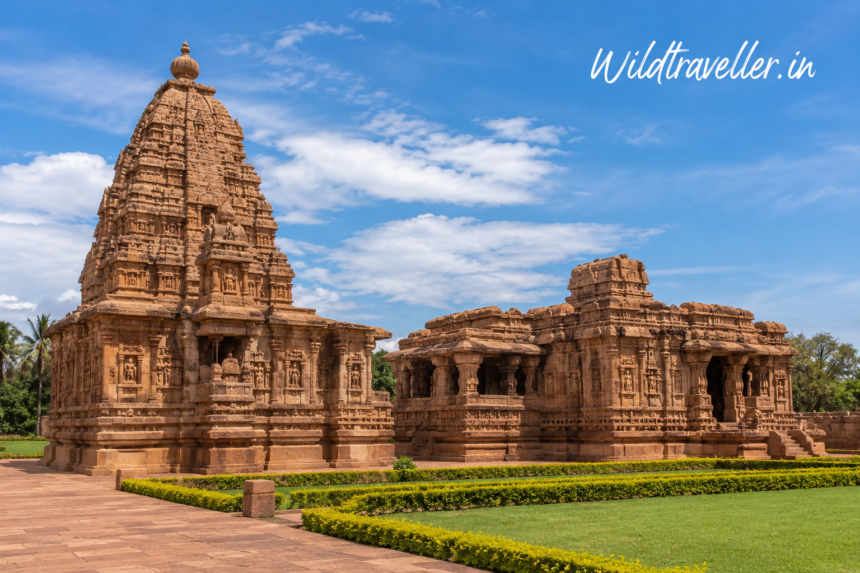
Pattadakal, Karnataka: Located on the banks of the Malaprabha River in northern Karnataka, Pattadakal is one of India’s most remarkable temple complexes and an extraordinary showcase of early Indian architecture. Famous for its beautifully carved Hindu temples and unique blend of northern and southern architectural styles, Pattadakal offers a fascinating journey into the history of the Chalukya dynasty.
- A Historic Chalukyan Capital
- The Virupaksha Temple
- Mallikarjuna Temple
- Papanatha Temple
- Sangameshwara Temple
- Galaganatha Temple
- Jain Narayana Temple
- Intricate Stone Carvings
- Aihole, Badami and Pattadakal Heritage Circuit
- Best Time to Visit Pattadakal
- How to Reach Pattadakal
- Things to Do in Pattadakal
- Photography at Pattadakal
- Local Food to Try
- Responsible Heritage Tourism
- Why Visit Pattadakal?
- Final Thoughts
Recognised as a UNESCO World Heritage Site, Pattadakal forms an important heritage circuit along with nearby Badami and Aihole.
A Historic Chalukyan Capital
Pattadakal flourished during the rule of the Early Chalukyas of Badami, particularly between the 7th and 8th centuries.
The site was an important centre for royal ceremonies and temple construction. Chalukyan architects experimented with different architectural traditions here, creating temples that combine elements of Nagara (northern) and Dravida (southern) styles.
This architectural experimentation is one of the reasons Pattadakal is so important in the history of Indian temple architecture.
The Virupaksha Temple
The Virupaksha Temple is arguably the most impressive monument at Pattadakal.
Built in the 8th century by Queen Lokamahadevi, the temple was constructed to commemorate her husband’s military victory.
Dedicated to Lord Shiva, the temple features an imposing tower, richly decorated pillars and intricate sculptures.
The walls contain scenes from Hindu mythology, including stories associated with the Ramayana and Mahabharata.
Mallikarjuna Temple
Located close to Virupaksha Temple, the Mallikarjuna Temple is another important Chalukyan monument.
It was commissioned by Queen Trilokyamahadevi, traditionally associated with the same period of royal construction.
The temple demonstrates the mature southern architectural style and contains beautifully carved sculptures.
Papanatha Temple
The Papanatha Temple is particularly interesting because it combines elements of both northern and southern architectural traditions.
Its design reflects the experimental nature of Chalukyan architecture at Pattadakal.
The temple contains detailed carvings depicting gods, mythological stories and scenes from everyday life.
Sangameshwara Temple
The Sangameshwara Temple is one of the oldest temples at Pattadakal.
Originally known as the Vijayeshwara Temple, it was commissioned during the reign of Vijayaditya.
The temple follows a strong Dravida architectural style and provides an important example of the early development of Chalukyan temple design.
Galaganatha Temple
The Galaganatha Temple stands out because of its northern Indian-style architectural features.
Its curving tower reflects the Nagara architectural tradition, making it an interesting contrast to the predominantly southern-style structures at the site.
The temple is dedicated to Lord Shiva.
Jain Narayana Temple
The Jain Narayana Temple represents the Jain architectural presence at Pattadakal.
Built during the later Chalukyan period, the temple demonstrates the religious diversity that existed in the region.
Its architecture and history add another dimension to Pattadakal’s heritage.
Intricate Stone Carvings
One of Pattadakal’s greatest attractions is the extraordinary detail of its stone sculptures.
The temples feature carvings of:
- Shiva
- Vishnu
- Durga
- Ganesha
- Lakshmi
- Mythological characters
- Musicians and dancers
- Animals
- Floral patterns
- Scenes from Hindu epics
The sculptures provide not only religious imagery but also valuable insights into the artistic traditions and cultural life of early medieval India.
Aihole, Badami and Pattadakal Heritage Circuit
Pattadakal is best experienced as part of a broader heritage journey through northern Karnataka.
Aihole
Often described as a laboratory of early Indian temple architecture, Aihole contains numerous temples representing different architectural experiments.
Badami
Located nearby, Badami is famous for its spectacular rock-cut cave temples carved into red sandstone cliffs.
Together, Aihole, Badami and Pattadakal provide an exceptional overview of the development of Chalukyan architecture.
Best Time to Visit Pattadakal
The best time to explore Pattadakal is generally October to February, when the weather is more comfortable for walking around the temple complex.
November to January can be particularly pleasant for heritage sightseeing.
The summer months can become extremely hot, so visitors should plan outdoor exploration during the cooler morning or late afternoon hours.
How to Reach Pattadakal
By Air
The nearest airport with useful commercial connectivity is Hubballi Airport.
From the airport, Pattadakal can be reached by road.
By Train
Badami Railway Station is one of the nearest railway stations and is connected to several parts of Karnataka and neighbouring states.
Bagalkot is another useful railway gateway.
By Road
Pattadakal is well connected by road with Badami, Aihole, Bagalkot and other towns in northern Karnataka.
A road trip is an excellent way to explore the three major heritage destinations in the region.
Things to Do in Pattadakal
Visitors can:
- Explore the Virupaksha Temple
- Admire the Mallikarjuna Temple
- Study the carvings of Papanatha Temple
- Visit Sangameshwara Temple
- Photograph Galaganatha Temple
- Explore the Jain Narayana Temple
- Learn about Chalukyan architecture
- Visit nearby Aihole and Badami
- Enjoy photography and heritage walks
Photography at Pattadakal
Pattadakal is a wonderful destination for architecture and heritage photography.
The detailed carvings, temple towers, pillars and stone textures provide countless subjects.
Early morning and late afternoon are particularly good times for photography because the softer sunlight brings out the details of the sculptures.
Visitors should follow site regulations regarding photography and avoid touching the sculptures.
Local Food to Try
While exploring northern Karnataka, travellers can experience regional dishes such as:
- Jowar roti
- Ennegayi
- North Karnataka thali
- Dharwad peda
- Girmit
- Mirchi bajji
- Traditional Karnataka sweets
Local restaurants around Badami and nearby towns provide convenient options for travellers visiting Pattadakal.
Responsible Heritage Tourism
Pattadakal is a protected heritage site, and visitors have an important role in preserving it.
Travellers should:
- Avoid touching or climbing on sculptures.
- Never write on temple walls.
- Do not remove stones or archaeological objects.
- Follow designated pathways.
- Keep the complex clean.
- Respect religious practices.
- Follow instructions from heritage authorities.
Why Visit Pattadakal?
Pattadakal is much more than a collection of ancient temples.
It represents a period when Indian architects experimented with different architectural traditions and developed distinctive forms that influenced temple construction for centuries.
The combination of history, sculpture, religion and architectural innovation makes Pattadakal one of Karnataka’s most fascinating heritage destinations.
Final Thoughts
Pattadakal is a magnificent window into the architectural brilliance of the Chalukyan era.
From the majestic Virupaksha Temple and intricately carved Mallikarjuna Temple to the architectural experiments visible throughout the complex, every monument tells a story about India’s rich artistic heritage.
Combined with nearby Badami and Aihole, Pattadakal makes for an unforgettable journey through the history of Karnataka.
Walk among the ancient temples, admire the masterful stone carvings and discover the timeless architectural legacy of Pattadakal.