
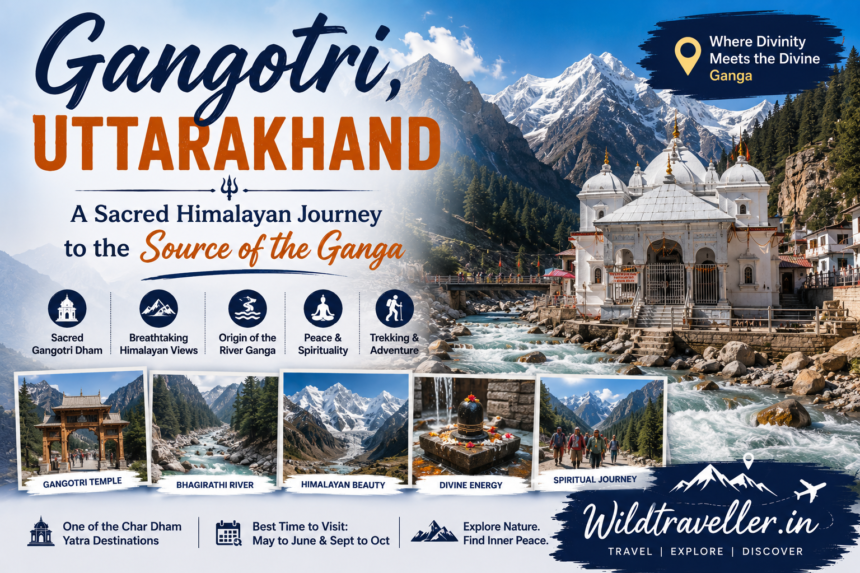
High in the Himalayas of Uttarakhand, Gangotri is one of India’s most revered pilgrimage destinations and one of the most spectacular places to experience the mountains. Surrounded by towering peaks, deep valleys, pine forests, and the Bhagirathi River, Gangotri combines spiritual significance with breathtaking Himalayan scenery.
- Why Visit Gangotri?
- Gangotri Temple – The Spiritual Heart of the Region
- Bhagirathi River
- Gaumukh – The Glacial Source
- Tapovan – High-Altitude Himalayan Landscape
- Surya Kund
- Pandava Gufa
- Bhairon Ghati
- Harsil – A Peaceful Himalayan Village
- Dharali and Mukhba Village
- Gangotri National Park
- Adventure Activities Around Gangotri
- Best Time to Visit Gangotri
- How to Reach Gangotri
- Suggested 4-Day Gangotri Itinerary
- Day 1 – Dehradun/Rishikesh to Harsil
- Day 2 – Harsil to Gangotri
- Day 3 – Gangotri Exploration
- Day 4 – Return Journey
- Travel Tips for Gangotri
- Responsible Tourism in the Himalayas
- Final Thoughts
Situated in Uttarkashi district, Gangotri is one of the four destinations of the Char Dham Yatra of Uttarakhand, along with Yamunotri, Kedarnath, and Badrinath.
For pilgrims, Gangotri is a sacred destination associated with Goddess Ganga. For nature lovers and adventure seekers, it is the gateway to some of the most dramatic landscapes in the Garhwal Himalayas.
Why Visit Gangotri?
Gangotri offers an extraordinary combination of spirituality, nature, and adventure.
The region is known for:
- Gangotri Temple
- Bhagirathi River
- Gaumukh Glacier
- Tapovan
- Pandava Gufa
- Surya Kund
- Bhairon Ghati
- Himalayan trekking
- Snow-covered peaks
- Dense alpine forests
- Sacred temples and pilgrimage traditions
The journey itself is an important part of the Gangotri experience, with winding mountain roads offering spectacular views of the Garhwal Himalayas.
Gangotri Temple – The Spiritual Heart of the Region
The Gangotri Temple is the most important attraction in the town.
Dedicated to Goddess Ganga, the temple stands beside the Bhagirathi River and attracts pilgrims from across India.
The present temple structure dates to the early 19th century and features traditional Himalayan temple architecture.
The temple opens seasonally because of the extreme winter conditions in the region. The opening and closing dates are traditionally associated with the Hindu calendar and may vary each year.
Visitors should check the latest official information before planning a pilgrimage.
Bhagirathi River
The Bhagirathi River flows through Gangotri and forms an important part of the town’s spiritual and natural landscape.
The river is regarded as the upper course of the Ganga. At Devprayag, the Bhagirathi meets the Alaknanda, after which the combined river is known as the Ganga.
The powerful mountain river, surrounded by rocky cliffs and forests, creates a spectacular setting around Gangotri.
Gaumukh – The Glacial Source
One of the most famous attractions associated with Gangotri is Gaumukh, the traditional source of the Bhagirathi River.
Gaumukh is located at the snout of the Gangotri Glacier and is reached by a challenging trekking route from Gangotri.
The trek passes through dramatic Himalayan terrain, with mountain peaks, rocky landscapes, and high-altitude scenery.
Access to the area is regulated, and visitors need to follow current permit and environmental requirements.
Because of the altitude and demanding terrain, travellers should prepare carefully and consider using experienced local guides.
Tapovan – High-Altitude Himalayan Landscape
Tapovan is a high-altitude area beyond Gaumukh and is known for its spectacular views of the surrounding Himalayan peaks.
The region is particularly popular among experienced trekkers and mountaineering enthusiasts.
The landscape includes alpine meadows, rocky terrain, glaciers, and dramatic mountain views.
Due to the challenging conditions and high altitude, Tapovan should not be treated as a casual day excursion.
Surya Kund
Surya Kund is a natural hot-water area located near the Gangotri Temple.
The Bhagirathi River creates a dramatic waterfall-like flow through the rocky landscape.
The sound of rushing water against the mountain rocks makes Surya Kund an atmospheric stop for visitors exploring the temple area.
Pandava Gufa
Located a short distance from Gangotri, Pandava Gufa is a cave associated with the Pandavas of the Mahabharata.
According to local tradition, the Pandavas are believed to have meditated or stayed in the area during their travels.
The cave and surrounding forest provide a peaceful excursion away from the main temple area.
Bhairon Ghati
Bhairon Ghati is located along the route between Gangotri and Harsil.
The area is known for its dramatic mountain scenery, deep valleys, dense forests, and the confluence of mountain streams.
The landscape around Bhairon Ghati is particularly striking during autumn and spring.
Harsil – A Peaceful Himalayan Village
Located on the way to Gangotri, Harsil is one of the most beautiful villages in the region.
The village is surrounded by mountains, forests, apple orchards, and the Bhagirathi River.
Harsil is an excellent place to spend a night before or after visiting Gangotri.
The peaceful atmosphere and spectacular scenery make it a favourite among travellers looking for a quieter Himalayan experience.
Dharali and Mukhba Village
Mukhba Village has an important connection with the worship of Goddess Ganga.
During the winter months, when Gangotri becomes inaccessible because of heavy snowfall, the idol of Goddess Ganga is traditionally brought to Mukhba.
The village therefore becomes an important spiritual centre during the winter season.
Nearby Dharali is known for its mountain scenery, apple orchards, and traditional village environment.
Gangotri National Park
The wider region is home to Gangotri National Park, a vast protected Himalayan landscape.
The park contains alpine meadows, glaciers, forests, and high mountain ecosystems.
It is home to wildlife such as the Himalayan blue sheep, Himalayan tahr, musk deer, and other high-altitude species.
Access to protected areas may require permits and can be seasonal, so travellers should check current regulations before visiting.
Adventure Activities Around Gangotri
Gangotri is not only a pilgrimage destination. It is also an important base for Himalayan adventure.
Trekking
Popular trekking routes include the trails towards Gaumukh and Tapovan.
Photography
The region offers spectacular opportunities for landscape photography.
Nature Walks
Short walks around Gangotri, Harsil, and nearby villages provide beautiful views without requiring strenuous trekking.
Camping
Camping may be available on designated routes and permitted areas, subject to local regulations and weather conditions.
Best Time to Visit Gangotri
May to June
The summer season is generally considered one of the best periods for pilgrimage and sightseeing after the temple opens.
The weather is comparatively pleasant during the daytime.
September to October
The post-monsoon season offers clear mountain views and crisp weather.
This is an excellent period for photography and trekking.
July to August
The monsoon can bring heavy rain to Uttarakhand, increasing the risk of landslides and road disruptions.
Travellers should carefully check weather and road conditions before travelling.
Winter
Gangotri experiences heavy snowfall and becomes inaccessible by road for extended periods.
The temple’s winter worship is traditionally continued at Mukhba.
How to Reach Gangotri
By Air
The nearest airport with regular commercial connectivity is Jolly Grant Airport near Dehradun.
From Dehradun, travellers need to continue by road.
By Train
The nearest major railway stations are Rishikesh and Haridwar.
From either location, travellers can continue towards Uttarkashi, Harsil, and Gangotri by road.
By Road
Gangotri is connected by road with Uttarkashi, Harsil, and other towns in Uttarakhand.
The mountain journey can take considerable time, so travellers should plan sufficient travel hours and avoid rushing.
Suggested 4-Day Gangotri Itinerary
Day 1 – Dehradun/Rishikesh to Harsil
Travel towards Harsil and spend the night in the peaceful Himalayan village.
Enjoy the mountain scenery and Bhagirathi River.
Day 2 – Harsil to Gangotri
Travel to Gangotri and visit the Gangotri Temple.
Explore the temple area, Bhagirathi River, and Surya Kund.
Day 3 – Gangotri Exploration
Visit nearby attractions such as Pandava Gufa and explore the surrounding Himalayan landscape.
Trekkers with appropriate permits, fitness, and preparation can begin their journey towards higher-altitude destinations.
Day 4 – Return Journey
Begin the return journey through Harsil and Uttarkashi.
Depending on your schedule, you can extend the trip to explore other destinations in Uttarakhand.
Travel Tips for Gangotri
- Carry warm clothing even during summer.
- Wear comfortable trekking shoes.
- Check road and weather conditions before travelling.
- Carry essential medicines and personal medication.
- Allow extra travel time for mountain roads.
- Avoid travelling during severe weather.
- Respect temple rules and local religious traditions.
- Carry reusable water bottles.
- Avoid littering in the Himalayan environment.
- Follow permit and forest regulations.
- Do not venture onto glaciers or high-altitude trails without proper preparation.
Responsible Tourism in the Himalayas
Gangotri is part of a fragile Himalayan ecosystem.
Visitors should make an effort to minimise their environmental impact.
Avoid single-use plastic, carry waste back with you, stay on established trails, and never disturb wildlife.
When visiting sacred sites and villages, respect local customs and traditions.
Supporting local homestays, guides, restaurants, and transport providers can also help local communities benefit from tourism.
Final Thoughts
Gangotri, Uttarakhand, is much more than a pilgrimage destination.
It is a place where the sacred Bhagirathi River, dramatic Himalayan peaks, ancient traditions, glaciers, forests, and peaceful mountain villages come together.
From the revered Gangotri Temple and Surya Kund to the challenging trek towards Gaumukh, the peaceful landscapes of Harsil, and the high-altitude wilderness of the Gangotri region, the journey offers experiences for both spiritual seekers and adventure lovers.
For travellers looking to explore the spiritual and natural beauty of the Himalayas, Gangotri is an unforgettable destination.