



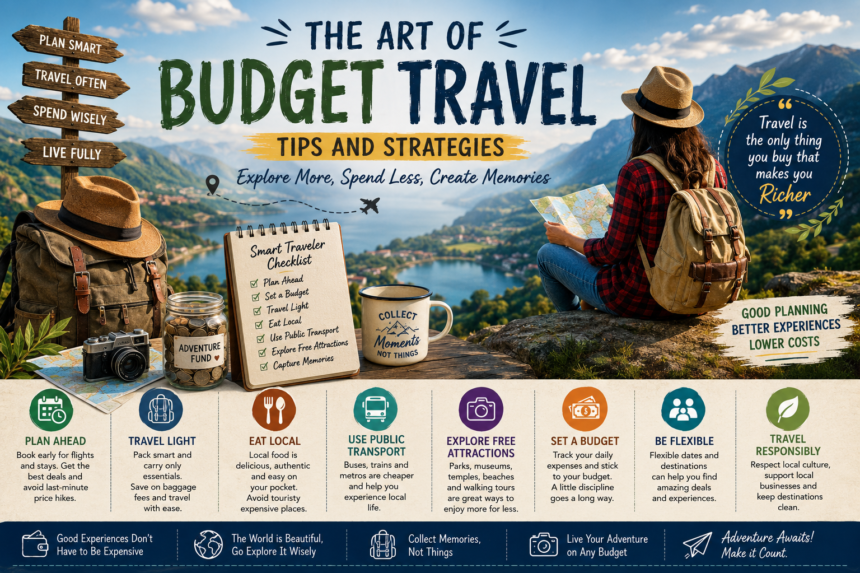
Traveling the world doesn’t have to come with a hefty price tag. With careful planning, smart choices, and a little flexibility, you can explore incredible destinations while keeping your expenses under control. Budget travel is not about sacrificing comfort—it’s about making informed decisions that allow you to experience more for less.
Whether you’re planning a weekend getaway, a cross-country road trip, or an international adventure, mastering the art of budget travel can help you create unforgettable memories without breaking the bank.
Why Choose Budget Travel?
Budget travel allows you to stretch your money further and enjoy longer, richer travel experiences.
Benefits of Budget Travel
- Travel more frequently
- Stay within your financial goals
- Discover authentic local experiences
- Meet fellow travelers
- Reduce unnecessary expenses
- Focus on meaningful experiences rather than luxury
1. Plan Your Trip in Advance
One of the easiest ways to save money is by planning ahead. Early bookings often come with lower prices and better availability.
Plan Ahead By:
- Booking flights several weeks or months in advance
- Reserving accommodations early
- Researching local transportation
- Preparing a daily itinerary
- Checking seasonal travel trends
Planning helps avoid last-minute price surges and allows you to compare the best options.
2. Travel During the Off-Season
Popular destinations become significantly cheaper outside peak holiday periods.
Advantages of Off-Season Travel
- Lower hotel rates
- Affordable airfare
- Fewer crowds
- Better sightseeing experience
- Easier restaurant reservations
For example, hill stations are often less expensive after the peak summer rush, while beach destinations become more affordable outside holiday seasons.
3. Set a Realistic Travel Budget
Before your journey, estimate your expected expenses.
Include categories such as:
- Transportation
- Accommodation
- Food
- Local travel
- Sightseeing
- Shopping
- Emergency fund
Tracking your spending helps you avoid overspending and stay financially organized.
4. Find Affordable Accommodation
Comfortable accommodation doesn’t always have to be expensive.
Consider staying in:
- Budget hotels
- Guesthouses
- Hostels
- Homestays
- Vacation rentals
- Eco-lodges
Homestays often provide valuable local insights and authentic cultural experiences.
5. Save Money on Transportation
Transportation is often one of the largest travel expenses.
Smart Ways to Save
- Book flights early
- Compare fares across platforms
- Use overnight trains or buses
- Walk whenever possible
- Rent bicycles
- Use public transportation
- Share taxis with fellow travelers
Exploring a city on foot often leads to unexpected discoveries.
6. Eat Like a Local
Local food is usually fresher, more authentic, and much cheaper than meals at tourist-oriented restaurants.
Budget-Friendly Food Tips
- Visit local markets
- Try street food from hygienic vendors
- Eat where locals dine
- Avoid overpriced tourist restaurants
- Carry reusable water bottles
- Pack light snacks for day trips
Sampling regional cuisine is one of the highlights of any journey.
7. Choose Free and Low-Cost Attractions
Many destinations offer unforgettable experiences without expensive entrance fees.
Examples include:
- Public parks
- Beaches
- Hiking trails
- Museums with free entry days
- Heritage walks
- Local festivals
- Scenic viewpoints
- Religious sites
- Cultural performances
Nature often provides the best experiences at no cost.
8. Pack Smart
Packing wisely prevents unnecessary expenses during your trip.
Essentials to Carry
- Comfortable clothing
- Walking shoes
- Power bank
- Reusable water bottle
- First-aid kit
- Chargers
- Travel documents
- Rain jacket
- Sunglasses
- Sunscreen
Traveling light also helps avoid excess baggage fees.
9. Travel with a Flexible Schedule
Flexibility can significantly reduce travel costs.
Consider:
- Mid-week flights
- Early morning departures
- Late-night buses
- Alternate airports
- Flexible hotel check-in dates
Even shifting your travel dates by a day or two can lead to substantial savings.
10. Limit Impulse Shopping
Souvenirs are wonderful keepsakes, but unnecessary shopping can quickly increase your expenses.
Instead, purchase meaningful local items such as:
- Handmade crafts
- Local spices
- Traditional textiles
- Regional artwork
- Small cultural souvenirs
Focus on quality rather than quantity.
Budget Travel Apps You Should Use
Useful apps can make your journey smoother and more economical.
Popular categories include:
- Flight comparison
- Hotel booking
- Navigation
- Currency conversion
- Expense tracking
- Language translation
- Public transport
- Weather forecasting
Downloading offline maps is especially useful when traveling to remote destinations.
Money-Saving Tips for Families
Families can save by:
- Booking family rooms
- Choosing self-catering accommodations
- Visiting free attractions
- Carrying snacks for children
- Using public transport
- Purchasing attraction passes where available
Planning together ensures a smoother and more affordable vacation.
Solo Budget Travel Tips
Solo travelers can reduce expenses by:
- Staying in hostels
- Joining walking tours
- Using shared transportation
- Traveling during weekdays
- Connecting with fellow travelers for group activities
Solo travel often provides greater flexibility in finding affordable options.
Sustainable Budget Travel
Budget travel and sustainable travel often go hand in hand.
Support responsible tourism by:
- Carrying reusable bottles and bags
- Reducing plastic waste
- Supporting local businesses
- Respecting local customs
- Conserving water and electricity
- Choosing eco-friendly accommodations when possible
Responsible travel benefits both the environment and local communities.
Common Budget Travel Mistakes to Avoid
Avoid these common pitfalls:
- Booking at the last minute
- Ignoring hidden fees
- Overpacking
- Not researching destinations
- Exchanging money at airports without comparing rates
- Skipping travel insurance for longer trips
- Overspending on shopping
Learning from these mistakes can save both money and stress.
Sample Daily Budget Plan
Here’s an example of a balanced daily travel budget:
- Accommodation: 30–40%
- Food: 20–25%
- Transportation: 15–20%
- Sightseeing: 10–15%
- Shopping & Miscellaneous: 10%
- Emergency Reserve: 5%
Adjust these percentages based on your destination and travel style.
Why Budget Travel Is So Rewarding
Budget travel encourages creativity, flexibility, and deeper cultural connections. Instead of focusing on luxury, it allows you to immerse yourself in local traditions, interact with residents, and discover hidden gems that many tourists overlook.
Traveling on a budget often leads to the most authentic and memorable experiences.
Final Thoughts
The art of budget travel isn’t about spending as little as possible—it’s about spending wisely. By planning ahead, choosing affordable accommodations, embracing local experiences, and making smart financial decisions, you can enjoy incredible adventures without straining your wallet.
Whether you’re exploring bustling cities, relaxing on pristine beaches, trekking through majestic mountains, or discovering hidden villages, budget travel opens the door to endless opportunities. Remember, the value of a journey isn’t measured by how much you spend but by the memories you create and the experiences you gain along the way.
So pack your bags, plan smart, and set off on your next adventure—because unforgettable travel doesn’t have to come with an expensive price tag.