

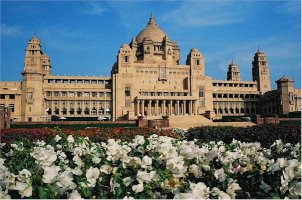
Rising majestically above the Blue City of Jodhpur, Umaid Bhawan Palace is one of India’s most spectacular royal residences. Built during the reign of Maharaja Umaid Singh, this magnificent palace combines grand Indo-European architecture, Art Deco influences and the rich heritage of Rajasthan.
- A Palace Built During Difficult Times
- An Architectural Masterpiece
- The Palace and Its Three Worlds
- A Museum Full of Royal History
- The Famous Vintage Cars
- Gardens and Palace Grounds
- Umaid Bhawan and Jodhpur’s Blue City
- Best Time to Visit Umaid Bhawan Palace
- How to Reach Umaid Bhawan Palace
- Travel Tips
- Why Visit Umaid Bhawan Palace?
- Conclusion
Today, the palace remains partly a royal residence while another section operates as a luxury heritage hotel. A museum within the complex allows visitors to discover the fascinating history of the Jodhpur royal family and the palace itself.
A Palace Built During Difficult Times
The story of Umaid Bhawan Palace is closely connected with the history of Jodhpur.
Construction began in 1929 during the reign of Maharaja Umaid Singh. One of the purposes behind the massive project was to provide employment to people affected by a severe period of drought and famine in the region.
Thousands of workers were involved in constructing the enormous palace complex. The project eventually took several years to complete and became one of the most ambitious architectural undertakings in Jodhpur.
The palace was named after Maharaja Umaid Singh and became a symbol of the city’s royal heritage and architectural ambition.
An Architectural Masterpiece
Umaid Bhawan Palace is built primarily using the distinctive Chittar sandstone, which gives the building its warm golden appearance.
The architecture blends several influences, creating a distinctive visual identity. Indian architectural traditions are combined with European design principles and Art Deco elements.
The enormous central dome is one of the palace’s most recognizable features. Rising high above the main structure, it gives the building a dramatic silhouette against the Jodhpur skyline.
Inside, visitors can find grand halls, polished stone surfaces, elaborate interiors and impressive decorative details.
The Palace and Its Three Worlds
Umaid Bhawan Palace is broadly divided into different sections serving different purposes.
Royal Residence
Part of the palace continues to serve as the residence of the Jodhpur royal family. This portion is not generally open to tourists.
Heritage Luxury Hotel
Another section operates as a luxury hotel, offering guests the opportunity to experience royal-style surroundings and hospitality.
The hotel’s grand rooms, landscaped gardens, dining spaces and historic interiors make it one of India’s most distinctive heritage accommodation experiences.
Palace Museum
The museum is open to visitors and provides an introduction to the history of the palace and the Jodhpur royal family.
Exhibits include royal memorabilia, photographs, clocks, decorative objects and other items associated with the palace’s history.
A Museum Full of Royal History
The Umaid Bhawan Palace Museum offers visitors a fascinating glimpse into the lifestyle of the former Jodhpur royal family.
Among the exhibits are:
- Royal portraits
- Vintage photographs
- Antique furniture
- Decorative objects
- Clocks
- Weapons and memorabilia
- Vintage automobiles
- Art and historical collections
The museum helps visitors understand how the palace evolved from a royal residence into one of India’s most recognizable heritage landmarks.
The Famous Vintage Cars
Automobile enthusiasts will particularly enjoy the palace’s collection of vintage and classic cars.
The vehicles reflect the relationship between India’s royal families and the automobile during the 20th century. Their elegant designs provide excellent opportunities for photography.
The collection also adds another dimension to the palace experience beyond architecture and history.
Gardens and Palace Grounds
The palace is surrounded by beautifully maintained gardens that provide a striking contrast to the dry landscape of Rajasthan.
The landscaped grounds are particularly attractive during the cooler months, when visitors can enjoy the combination of greenery, sandstone architecture and clear blue skies.
The palace’s elevated location also provides impressive views across parts of Jodhpur.
Umaid Bhawan and Jodhpur’s Blue City
A visit to Umaid Bhawan Palace can easily be combined with other attractions in Jodhpur.
The city is famous for its blue-painted houses and historic landmarks, including:
- Mehrangarh Fort
- Jaswant Thada
- Mandore Gardens
- Clock Tower and Sardar Market
- Old City streets
- Rao Jodha Desert Rock Park
The enormous Mehrangarh Fort is particularly spectacular and provides an excellent contrast to the elegant architecture of Umaid Bhawan Palace.
Best Time to Visit Umaid Bhawan Palace
The best time to explore Jodhpur is generally between October and March, when temperatures are more comfortable.
Winter
October to February is ideal for sightseeing, photography and exploring the city’s historic attractions.
Summer
March to June can be extremely hot in Jodhpur. Visitors travelling during this period should plan outdoor sightseeing for the morning or evening.
Monsoon
The monsoon season can bring occasional rainfall and somewhat cooler conditions, although the weather can vary.
How to Reach Umaid Bhawan Palace
By Air
Jodhpur has its own airport, with connections to major Indian cities. The palace is located within the city and can be reached by taxi or local transport.
By Train
Jodhpur Junction is an important railway station with connections to Delhi, Jaipur, Ahmedabad, Mumbai and other cities.
By Road
Jodhpur is well connected by road with Jaipur, Udaipur, Jaisalmer and other major destinations in Rajasthan.
Travel Tips
- Check museum opening hours before visiting.
- Wear comfortable footwear when exploring the palace and surrounding attractions.
- Visit during the cooler months for a more comfortable experience.
- Photography rules may differ between the museum, hotel and other areas.
- Respect restricted areas of the royal residence.
- Combine the visit with Mehrangarh Fort and Jaswant Thada for a complete Jodhpur heritage experience.
- Allow enough time to explore the museum and surrounding grounds.
Why Visit Umaid Bhawan Palace?
Umaid Bhawan Palace is more than an impressive building. It represents an important chapter in Jodhpur’s royal history and demonstrates how traditional Indian architecture evolved alongside modern influences during the 20th century.
Its grand scale, golden sandstone façade, elegant interiors and fascinating history make it one of the most memorable attractions in Rajasthan.
For travellers interested in royal heritage, architecture, history, photography and luxury travel, Umaid Bhawan Palace is an unforgettable destination.
Conclusion
Umaid Bhawan Palace stands as one of the finest examples of Rajasthan’s royal architectural heritage.
From its magnificent central dome and golden Chittar sandstone to its museum, vintage cars and beautifully landscaped gardens, every part of the palace reflects the grandeur of a bygone era.
Whether you visit the museum, stay at the heritage hotel or simply admire the palace from the surrounding areas, Umaid Bhawan Palace offers a fascinating glimpse into the royal legacy of Jodhpur.
A trip to Rajasthan would be incomplete without experiencing the timeless elegance of this remarkable palace.