


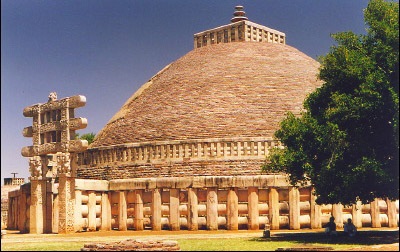
The Sanchi Stupa, located in Madhya Pradesh, is one of India’s most important Buddhist monuments and a magnificent example of ancient Indian architecture. Situated on a hilltop near Sanchi, the monument complex reflects centuries of Buddhist history, art, and culture.
A Monument Built by Emperor Ashoka
The original stupa at Sanchi is traditionally associated with Emperor Ashoka, who commissioned it during the 3rd century BCE. Ashoka played a major role in spreading Buddhism across the Indian subcontinent after embracing the teachings of the Buddha.
Over subsequent centuries, the complex was expanded and embellished by later rulers and patrons. Stone gateways, railings, temples, monasteries, and other structures were added, transforming Sanchi into an important Buddhist centre.
The Great Stupa
The most famous monument at Sanchi is the Great Stupa, also known as Stupa No. 1. Its massive hemispherical dome was designed to symbolize the Buddha and the spiritual path toward enlightenment.
Visitors traditionally walk around the stupa in a clockwise direction as an act of reverence. The simple yet powerful design of the monument creates an atmosphere of peace and contemplation.
Magnificent Toranas
One of the most remarkable features of Sanchi is its four elaborately carved gateways, known as toranas. Positioned at the cardinal directions, these gateways are covered with detailed sculptures depicting scenes associated with the life and teachings of Buddha.
Interestingly, the Buddha is generally represented symbolically rather than in human form in many of these early carvings. Symbols such as the Bodhi tree, empty throne, footprints, and Dharma wheel were used to represent important events and teachings.
Ancient Stone Carvings
The carvings at Sanchi provide valuable insight into ancient Indian society. Alongside Buddhist themes, the sculptures feature animals, flowers, mythical creatures, musicians, dancers, royal processions, and scenes from everyday life.
The artistry demonstrates the extraordinary craftsmanship of Indian sculptors more than two thousand years ago.
UNESCO World Heritage Site
The Buddhist Monuments at Sanchi were declared a UNESCO World Heritage Site in 1989. The site is recognized for its exceptional historical, religious, artistic, and architectural importance.
Today, the monument complex is protected as an important archaeological and cultural heritage site and attracts visitors, historians, researchers, and Buddhist pilgrims from around the world.
Best Time to Visit Sanchi
The best time to explore Sanchi is generally between October and March, when the weather is more comfortable for sightseeing. The hilltop setting also provides beautiful views of the surrounding countryside.
The nearby Sanchi Archaeological Museum is worth visiting for those interested in learning more about the sculptures, inscriptions, and archaeological discoveries associated with the site.
Nearby Attractions
Sanchi can be combined with a visit to Bhopal, the capital of Madhya Pradesh, which is located relatively close to the monument. Other attractions in the region include Udayagiri Caves and the historic town of Vidisha.
Together, these destinations offer travelers an opportunity to explore the ancient Buddhist, Hindu, and cultural heritage of central India.
A Journey into Ancient India
The Sanchi Stupa stands as a remarkable symbol of India’s Buddhist heritage. Its peaceful surroundings, magnificent gateways, ancient sculptures, and enduring spiritual significance make it one of the country’s most fascinating historical destinations.
A visit to Sanchi is not simply a journey to an ancient monument—it is an opportunity to step into the history of Buddhism and experience the artistic achievements of one of India’s great civilizations.