


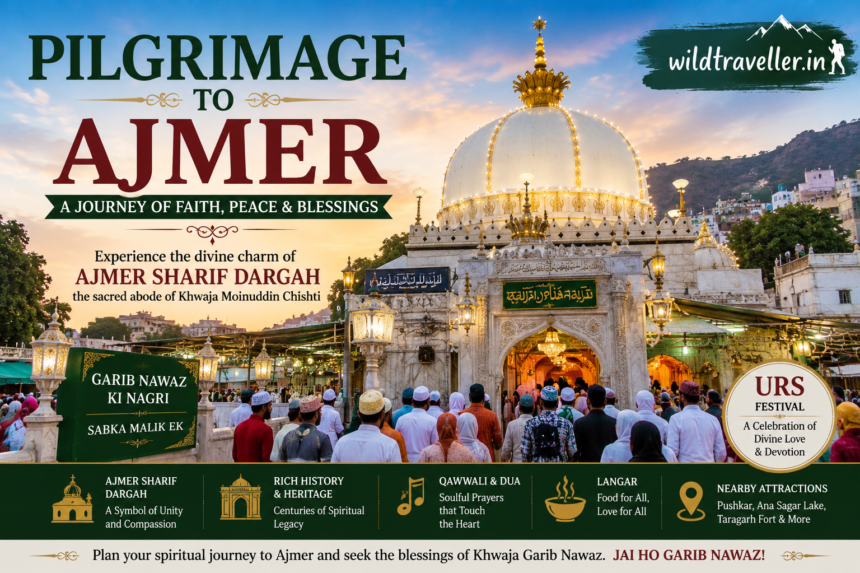
Ajmer, Rajasthan: Nestled amidst the Aravalli Hills in Rajasthan, Ajmer is one of India’s most revered pilgrimage destinations. The city is best known for the Ajmer Sharif Dargah, the final resting place of the revered Sufi saint Khwaja Moinuddin Chishti, also known as Gharib Nawaz (“Benefactor of the Poor”). Every year, millions of devotees from different faiths visit Ajmer to seek blessings, offer prayers, and experience the city’s unique spiritual atmosphere.
Ajmer Sharif Dargah: The Heart of the Pilgrimage
The Ajmer Sharif Dargah is among the most important Sufi shrines in the world. Built in memory of Khwaja Moinuddin Chishti, who preached love, peace, compassion, and harmony during the 12th century, the shrine welcomes people regardless of religion, caste, or nationality.
Pilgrims traditionally offer chadar (decorative cloth), flowers, and prayers at the saint’s tomb, believing that sincere prayers made here are answered.
History of the Dargah
Khwaja Moinuddin Chishti arrived in Ajmer during the 12th century and dedicated his life to serving humanity through the teachings of Sufism. Following his passing in 1236 CE, his tomb became a major center of devotion.
Over the centuries, several rulers—including the Mughal Emperor Akbar, Emperor Jahangir, Shah Jahan, and later rulers—contributed to the expansion of the shrine. Emperor Akbar is said to have walked barefoot from Agra to Ajmer to fulfill a vow after his prayers were answered.
Major Attractions Inside the Dargah
The Holy Tomb
The marble mausoleum of Khwaja Moinuddin Chishti is the focal point of the shrine, where devotees gather to offer prayers and seek blessings.
Buland Darwaza
A magnificent gateway that welcomes pilgrims into the sacred complex.
Shahjahani Mosque
Built by Mughal Emperor Shah Jahan, this beautiful white marble mosque is admired for its elegant architecture and peaceful atmosphere.
Nizam Gate
Donated by the Nizam of Hyderabad, this grand entrance serves as one of the main gateways to the shrine.
Giant Degs
The shrine houses two enormous metal cauldrons (degs) used to prepare traditional langar (community meals), which are distributed among thousands of devotees.
Urs Festival
The Urs of Khwaja Moinuddin Chishti is the most important annual event at Ajmer Sharif. Held according to the Islamic lunar calendar, the festival commemorates the saint’s death anniversary, which is regarded in Sufi tradition as his union with the Divine.
During Urs, the city comes alive with:
- Qawwali performances
- Special prayers
- Religious processions
- Langar distribution
- Spiritual gatherings
The festival attracts pilgrims from across India and around the world.
Nearby Places to Visit
Ana Sagar Lake
A picturesque artificial lake built in the 12th century, offering peaceful views and boating opportunities.
Adhai Din Ka Jhonpra
A remarkable Indo-Islamic monument known for its intricate architecture and historical significance.
Taragarh Fort
One of Rajasthan’s oldest hill forts, offering panoramic views of Ajmer and the surrounding Aravalli Hills.
Pushkar
Located just 15 km from Ajmer, Pushkar is famous for the Brahma Temple, the sacred Pushkar Lake, and the world-renowned Pushkar Camel Fair.
Best Time to Visit
The ideal time to visit Ajmer is from October to March, when the weather is pleasant. Those wishing to experience the spiritual energy of the Urs Festival should plan their visit according to the Islamic lunar calendar.
How to Reach
By Air
The nearest airport is Kishangarh Airport, about 30 km from Ajmer. Jaipur International Airport, approximately 135 km away, offers broader domestic and international connectivity.
By Rail
Ajmer Junction Railway Station is a major rail hub with excellent connections to Delhi, Mumbai, Jaipur, Ahmedabad, and many other cities.
By Road
Ajmer is well connected by national highways, with regular buses and taxis available from Jaipur, Jodhpur, Udaipur, Kota, Delhi, and other nearby destinations.
Pilgrimage Tips
- Dress modestly while visiting the Dargah.
- Remove footwear before entering the shrine.
- Cover your head as a mark of respect.
- Be mindful of local customs and maintain decorum.
- Keep personal belongings secure, especially during peak pilgrimage periods.
- Early morning visits are generally less crowded.
Why Visit Ajmer?
Ajmer is much more than a religious destination—it is a symbol of India’s rich spiritual and cultural heritage. The Ajmer Sharif Dargah stands as a beacon of peace, compassion, and unity, welcoming people from every walk of life.
Whether you are on a spiritual pilgrimage, exploring Rajasthan’s history, or seeking a deeper cultural experience, Ajmer offers an unforgettable journey filled with faith, devotion, and timeless traditions.