

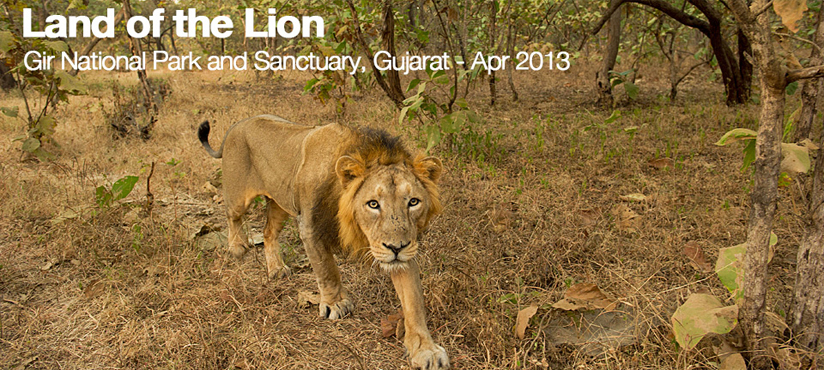
Located in the Saurashtra region of Gujarat, Gir National Park is one of India’s most remarkable wildlife destinations and the last natural stronghold of the magnificent Asiatic lion. Its dry deciduous forests, grasslands, rocky hills and seasonal rivers create a unique landscape that supports a fascinating variety of wildlife.
- A Unique Wildlife Destination
- The Asiatic Lion: Gir’s Star Attraction
- Wildlife in Gir National Park
- Crocodiles and the Kamleshwar Reservoir
- Birdwatching in Gir
- Gir Safari Experience
- Best Time to Visit Gir National Park
- How to Reach Gir National Park
- Nearby Attractions
- Travel Tips for Gir
- Why Visit Gir National Park?
- Conservation and the Future of Gir’s Lions
- Conclusion
For wildlife enthusiasts, photographers and nature lovers, Gir offers an opportunity to experience one of India’s most iconic animals in its natural habitat.
A Unique Wildlife Destination
Gir’s conservation story is extraordinary. The Asiatic lion once occupied a much larger area across parts of Asia, but its population declined dramatically due to habitat loss and hunting.
The remaining wild population survived in the Gir landscape, making the region critically important for lion conservation.
Today, the Gir National Park and surrounding Gir landscape support a growing population of Asiatic lions. The wider protected ecosystem also provides habitat for leopards, deer, antelopes, crocodiles, birds and many other species.
The Asiatic Lion: Gir’s Star Attraction
The Asiatic lion is the undisputed symbol of Gir.
Compared with African lions, Asiatic lions generally have a smaller body size and a distinctive fold of skin along the abdomen. Male lions also tend to have less prominent manes, allowing their ears to remain more visible.
Seeing an Asiatic lion moving through the dry forest or resting beneath a tree can be an unforgettable wildlife experience.
However, wildlife sightings are never guaranteed. Patience, experienced guides and careful observation are essential during a safari.
Wildlife in Gir National Park
Although lions are the main attraction, Gir is home to an impressive range of wildlife.
Visitors may encounter:
- Asiatic lion
- Indian leopard
- Chital or spotted deer
- Sambar deer
- Nilgai
- Chinkara
- Wild boar
- Four-horned antelope
- Indian gazelle
- Golden jackal
- Striped hyena
- Indian mongoose
- Hanuman langur
- Indian crested porcupine
The sanctuary’s varied terrain provides different habitats for these animals.
Crocodiles and the Kamleshwar Reservoir
Gir is also home to the mugger crocodile. Water bodies and reservoirs within the landscape provide important habitat for these reptiles.
The Kamleshwar Reservoir is particularly notable for wildlife observation and birdwatching. Visitors may see crocodiles basking near the water while numerous birds gather around the surrounding wetlands.
Birdwatching in Gir
Gir is not just a destination for mammal lovers. Its forests and wetlands support a rich bird population.
Birdwatchers may encounter species such as:
- Indian peafowl
- Crested serpent eagle
- Bonelli’s eagle
- Indian eagle-owl
- Painted sandgrouse
- Parakeets
- Kingfishers
- Woodpeckers
- Bee-eaters
- Various species of vultures and waterbirds
Early mornings are particularly rewarding for birdwatching because the forest is active with bird calls.
Gir Safari Experience
The best way to explore the protected forest is through an authorised safari. Safari vehicles follow designated routes through the forest, allowing visitors to observe wildlife while maintaining a safe distance.
A typical safari may reveal deer grazing in open grasslands, monkeys moving through trees, peafowl calling from the roadside or, with some luck, a lion emerging from the forest.
The unpredictability of wildlife is part of what makes a Gir safari exciting.
Best Time to Visit Gir National Park
The ideal time to visit Gir generally falls between December and March, when the weather is relatively comfortable and conditions are suitable for wildlife exploration.
Winter
From December to February, mornings can be cool while daytime temperatures remain pleasant. This is an excellent period for photography and safari activities.
Summer
March to May can be hot, but wildlife sightings may become more rewarding around water sources as temperatures rise.
Monsoon
The protected area has seasonal closures during the monsoon period. Visitors should always check current forest department regulations and opening dates before planning their trip.
How to Reach Gir National Park
By Air
The nearest airports include Keshod and Rajkot, while Ahmedabad provides another major air connection for travellers arriving from distant parts of India.
By Train
Junagadh, Veraval and other nearby railway stations provide useful connections to the Gir region.
By Road
Gir can be reached by road from Junagadh, Rajkot, Ahmedabad, Somnath and other major destinations in Gujarat.
Many travellers combine a Gir safari with a visit to Somnath, making it possible to experience both Gujarat’s wildlife and cultural heritage during the same trip.
Nearby Attractions
A trip to Gir can be combined with several interesting destinations in the surrounding region.
Somnath
The famous Somnath Temple is one of Gujarat’s most important pilgrimage destinations and lies within convenient travelling distance of the Gir region.
Junagadh
The historic city of Junagadh offers attractions including forts, temples and access to the Girnar hills.
Girnar
Girnar is an important pilgrimage and mountain destination known for its temples and spectacular landscape.
Travel Tips for Gir
- Book your safari in advance during peak travel periods.
- Carry binoculars for better wildlife observation.
- Use a camera with a suitable telephoto lens for wildlife photography.
- Wear comfortable, lightweight clothing.
- Choose neutral colours while entering the forest.
- Avoid loud conversations during safari.
- Never attempt to feed or approach wild animals.
- Follow the instructions of forest officials and guides.
- Carry drinking water and sun protection.
- Check current safari timings, permits and entry rules before travelling.
Why Visit Gir National Park?
Gir is unlike most other wildlife destinations in India because it offers something truly unique: the opportunity to see the Asiatic lion in the wild.
But the experience goes beyond lions. The dry forests, open grasslands, crocodile-filled water bodies, colourful birds and diverse wildlife create an ecosystem that rewards careful observation.
For photographers, Gir offers dramatic landscapes and fascinating wildlife subjects. For families, it provides an exciting introduction to India’s natural heritage. For wildlife enthusiasts, it is an essential destination.
Conservation and the Future of Gir’s Lions
The success of Asiatic lion conservation at Gir is an important achievement in Indian wildlife protection. From a population that once faced severe decline, the lions have recovered significantly.
At the same time, conservationists continue to focus on habitat protection, managing human-wildlife interactions and maintaining healthy ecosystems.
The future of the Asiatic lion depends not only on protecting individual animals but also on ensuring that suitable habitats remain secure and that the species has a resilient, sustainable population.
Conclusion
Gir National Park is much more than a wildlife safari destination—it is the living home of one of the world’s most remarkable big cats.
The sight of an Asiatic lion walking through Gujarat’s dry forests is an experience that few wildlife destinations can match. Combined with its leopards, deer, crocodiles, birds and beautiful landscapes, Gir offers a fascinating journey into India’s wild heart.
If you are planning a wildlife trip in India, Gir National Park should be high on your list, especially if seeing the Asiatic lion in its natural habitat is on your travel bucket list.