

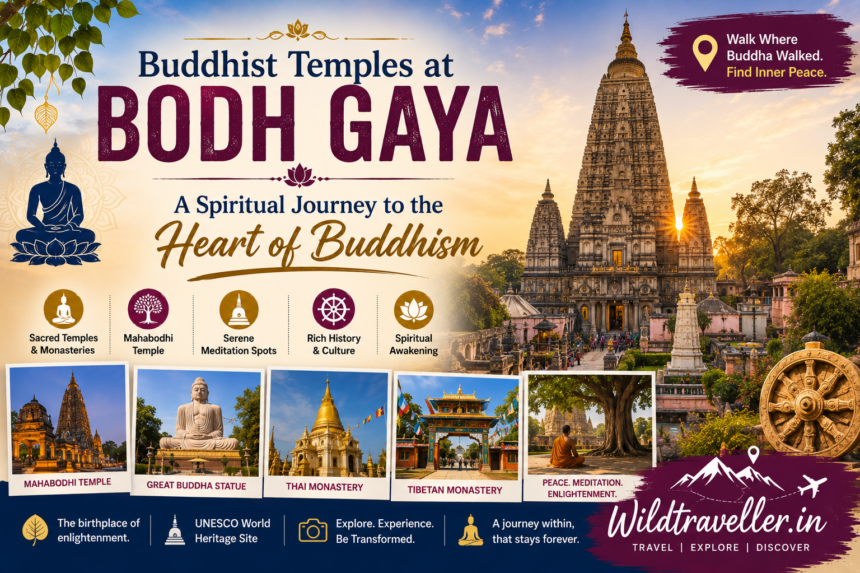
Located in Bihar, Bodh Gaya is one of the most sacred Buddhist pilgrimage destinations in the world. It is the place where Siddhartha Gautama attained enlightenment and became the Buddha more than 2,500 years ago.
- Why Visit the Buddhist Temples of Bodh Gaya?
- Mahabodhi Temple – The Spiritual Centre of Bodh Gaya
- Bodhi Tree – The Sacred Tree of Enlightenment
- Great Buddha Statue
- Thai Monastery
- Royal Bhutan Monastery
- Japanese Temple – Indosan Nipponji
- Tibetan Monastery
- Chinese Temple
- Vietnamese Temple
- Dungeshwari Cave Temples
- Sujata Stupa
- Niranjana River
- Meditation and Spiritual Retreats
- Buddhist Festivals in Bodh Gaya
- Best Time to Visit Bodh Gaya
- How to Reach Bodh Gaya
- Suggested 2-Day Bodh Gaya Itinerary
- Travel Tips for Bodh Gaya
- Responsible Spiritual Tourism
- Places to Visit Near Bodh Gaya
- Final Thoughts
Today, Bodh Gaya attracts pilgrims, monks, spiritual seekers, historians, and travellers from across the world. The town is home to the magnificent Mahabodhi Temple, surrounded by monasteries and Buddhist temples representing countries and traditions from across Asia.
With its peaceful atmosphere, ancient heritage, impressive architecture, and deep spiritual significance, Bodh Gaya is one of India’s most important cultural destinations.
Why Visit the Buddhist Temples of Bodh Gaya?
Bodh Gaya offers a unique opportunity to experience Buddhist traditions from different parts of the world in one destination.
Visitors can discover:
- Mahabodhi Temple
- Bodhi Tree
- Great Buddha Statue
- Thai Monastery
- Royal Bhutan Monastery
- Japanese Buddhist Temple
- Tibetan Monastery
- Chinese Temple
- Vietnamese Temple
- Meditation centres
- International Buddhist monasteries
Each monastery has its own architectural style, artistic traditions, and cultural character.
Mahabodhi Temple – The Spiritual Centre of Bodh Gaya
The Mahabodhi Temple is the most important Buddhist monument in Bodh Gaya.
The temple stands at the site traditionally associated with Buddha’s enlightenment.
The tall brick temple tower, sacred gardens, meditation areas, and surrounding structures create an atmosphere of deep tranquillity.
The monument is recognised as a UNESCO World Heritage Site and is one of the most important Buddhist pilgrimage centres in the world.
Visitors are expected to maintain silence and follow the site’s rules.
Bodhi Tree – The Sacred Tree of Enlightenment
The Bodhi Tree stands beside the Mahabodhi Temple and is considered one of the most sacred places in Buddhism.
According to Buddhist tradition, Siddhartha Gautama meditated beneath a Bodhi tree and attained enlightenment.
Pilgrims from around the world gather beneath the tree to meditate, pray, chant, and make offerings.
The current tree is considered a descendant of the original sacred tree through a long historical lineage.
Great Buddha Statue
The Great Buddha Statue is one of Bodh Gaya’s most recognisable landmarks.
The enormous seated Buddha image is surrounded by smaller statues representing Buddhist disciples.
The peaceful garden around the statue makes it a popular place for visitors seeking a quiet environment for reflection and photography.
Thai Monastery
The Thai Monastery is one of Bodh Gaya’s most distinctive international Buddhist monasteries.
Its architecture reflects traditional Thai design, creating a striking contrast with the Indian temple architecture found elsewhere in the town.
The monastery represents the strong historical connection between India and Thailand through Buddhism.
Royal Bhutan Monastery
The Royal Bhutan Monastery showcases Bhutanese Buddhist architecture and artistic traditions.
The monastery is decorated with intricate designs and religious imagery.
Visitors interested in Himalayan Buddhist traditions will find the monastery particularly fascinating.
Japanese Temple – Indosan Nipponji
The Indosan Nipponji Japanese Temple reflects traditional Japanese Buddhist architecture.
The temple is known for its simple and elegant design and peaceful surroundings.
It is also associated with the promotion and preservation of Buddhist teachings and culture.
The temple is an excellent place to experience a different architectural interpretation of Buddhism.
Tibetan Monastery
Bodh Gaya has several Tibetan Buddhist institutions that attract monks and visitors from the Himalayan region and beyond.
The Tibetan monasteries provide an opportunity to experience Tibetan Buddhist traditions, prayer rituals, meditation, and distinctive monastery architecture.
During major Buddhist festivals, the area can become particularly vibrant with pilgrims and monks.
Chinese Temple
The Chinese Temple is another example of the international Buddhist presence in Bodh Gaya.
Its architectural details and religious artwork reflect Chinese Buddhist traditions.
The temple is located close to the Mahabodhi Temple and can easily be included in a walking tour of the town’s major Buddhist attractions.
Vietnamese Temple
The Vietnamese Temple adds another dimension to Bodh Gaya’s multicultural Buddhist landscape.
The temple is associated with Vietnamese Buddhist traditions and provides a peaceful environment for meditation and reflection.
Its presence demonstrates how Bodh Gaya serves as a meeting point for Buddhist communities from across Asia.
Dungeshwari Cave Temples
Located outside central Bodh Gaya, the Dungeshwari Cave Temples are associated with an important period in Buddha’s spiritual journey.
According to Buddhist tradition, Siddhartha Gautama practised severe asceticism in this area before eventually choosing the Middle Way.
The caves are located in a rocky landscape and offer a quieter experience compared with the busy Mahabodhi Temple complex.
Sujata Stupa
The Sujata Stupa is associated with Sujata, who according to Buddhist tradition offered food to Siddhartha Gautama before his enlightenment.
The story is significant because it represents the turning point in Buddha’s journey away from extreme asceticism and towards the Middle Way.
The site is located across the Niranjana River from the main Mahabodhi Temple area.
Niranjana River
The Niranjana River, also known as the Neranjana, is closely associated with Buddha’s life before enlightenment.
The river flows near several important Buddhist heritage sites, including the area associated with Sujata.
The landscape around the river provides a quieter contrast to the busy pilgrimage areas.
Meditation and Spiritual Retreats
Bodh Gaya is an important centre for meditation and Buddhist study.
Visitors can find opportunities for:
- Meditation
- Mindfulness
- Buddhist teachings
- Chanting
- Spiritual retreats
- Monastic experiences
Programmes vary by institution, and visitors should check schedules and participation requirements before attending.
Buddhist Festivals in Bodh Gaya
Bodh Gaya becomes especially vibrant during important Buddhist occasions.
Buddha Purnima
Buddha Purnima commemorates major events in the life of Gautama Buddha and attracts large numbers of pilgrims.
Tibetan Buddhist Festivals
Tibetan Buddhist communities organise prayers, teachings, and ceremonies at different times of the year.
Dalai Lama Teachings
When major Tibetan Buddhist teachers conduct teachings in Bodh Gaya, the town can attract large international gatherings.
Travellers planning to visit during such periods should book accommodation well in advance.
Best Time to Visit Bodh Gaya
October to February
The winter months are generally the most comfortable for sightseeing and pilgrimage.
The weather is pleasant for walking between monasteries and temples.
March to May
Temperatures can become increasingly hot, particularly during the afternoon.
Morning visits are more comfortable.
June to September
The monsoon brings rainfall and humidity.
While the surrounding landscape becomes greener, outdoor sightseeing can be affected by rain.
How to Reach Bodh Gaya
By Air
Gaya International Airport is located close to Bodh Gaya and receives seasonal and international Buddhist pilgrimage traffic in addition to domestic services.
By Train
Gaya Junction is the nearest major railway station and has connections to several major cities across India.
Bodh Gaya can be reached from the railway station by road.
By Road
Bodh Gaya is connected by road with Gaya, Patna, Varanasi, Rajgir, Nalanda, and other destinations in Bihar.
It can easily be incorporated into a Buddhist heritage circuit.
Suggested 2-Day Bodh Gaya Itinerary
Day 1 – Mahabodhi Temple and International Monasteries
Begin at the Mahabodhi Temple and spend time around the Bodhi Tree.
Explore the surrounding temple complex and meditation areas.
Later, visit the Great Buddha Statue, Thai Monastery, Japanese Temple, and nearby international monasteries.
Day 2 – Buddhist Heritage Trail
Visit the Dungeshwari Cave Temples in the morning.
Continue towards Sujata Stupa and the Niranjana River.
Return to Bodh Gaya and spend the evening in meditation or exploring additional monasteries.
Travel Tips for Bodh Gaya
- Dress modestly when visiting temples and monasteries.
- Maintain silence in meditation areas.
- Remove footwear where required.
- Follow photography restrictions.
- Do not disturb monks or people engaged in meditation.
- Carry drinking water.
- Wear comfortable footwear for walking.
- Book accommodation early during major Buddhist festivals.
- Respect local customs and religious practices.
- Keep the temple and monastery areas clean.
Responsible Spiritual Tourism
Bodh Gaya is not simply a tourist attraction—it is a living spiritual centre visited by millions of pilgrims.
Visitors should treat temples, monasteries, monks, and meditation spaces with respect.
Avoid loud conversations, intrusive photography, and behaviour that could disturb people engaged in prayer or meditation.
Supporting local businesses while respecting the sacred nature of the destination can help create a positive travel experience.
Places to Visit Near Bodh Gaya
Travellers with additional time can explore several important destinations nearby.
Gaya
The ancient city of Gaya has important Hindu pilgrimage sites and cultural landmarks.
Rajgir
Rajgir is associated with both Buddhism and Jainism and features hills, ancient ruins, and religious sites.
Nalanda
The ruins of Nalanda Mahavihara provide an extraordinary insight into one of the ancient world’s great centres of learning.
Varanasi
Located farther west, Varanasi can be combined with Bodh Gaya for a broader spiritual and cultural journey through northern India.
Final Thoughts
Bodh Gaya is one of the world’s most important Buddhist destinations and a place where history, spirituality, architecture, and international culture come together.
The magnificent Mahabodhi Temple, sacred Bodhi Tree, international monasteries, Great Buddha Statue, Dungeshwari caves, and Sujata Stupa make the region an unforgettable destination for anyone interested in Buddhism and Indian heritage.
Whether you visit as a pilgrim, a spiritual seeker, a history enthusiast, or simply a curious traveller, Bodh Gaya offers a profound journey into the origins and traditions of Buddhism.