

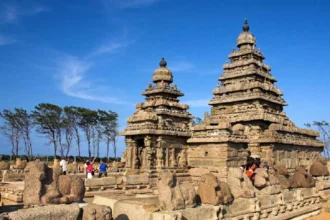



Konark, Odisha: The Konark Sun Temple is one of India’s most extraordinary architectural masterpieces and a UNESCO World Heritage Site. Located about 35 km from Puri and 65 km from Bhubaneswar, this magnificent 13th-century temple is dedicated to Surya, the Sun God. Designed in the shape of a colossal stone chariot with intricately carved wheels and powerful horses, the Konark Sun Temple stands as a timeless symbol of Odisha’s rich cultural, artistic, and engineering heritage.
Every year, thousands of tourists, history enthusiasts, photographers, and pilgrims visit Konark to admire its breathtaking architecture and learn about its fascinating history.
History of Konark Sun Temple
The Konark Sun Temple was built around 1250 CE by King Narasimhadeva I of the Eastern Ganga Dynasty to commemorate military victories and honor the Sun God.
The temple was conceived as a gigantic celestial chariot carrying Surya across the heavens. Although parts of the original structure have collapsed over time, the remaining complex continues to amaze visitors with its grandeur and intricate craftsmanship.
Today, the temple is recognized as one of India’s greatest architectural achievements and was declared a UNESCO World Heritage Site in 1984.
A Marvel of Kalinga Architecture
The Konark Sun Temple is celebrated as the pinnacle of Kalinga architecture, featuring remarkable engineering and artistic excellence.
The Stone Chariot
The entire temple is designed as the Sun God’s celestial chariot, featuring:
- 24 massive carved stone wheels
- Seven beautifully sculpted horses
- Exquisite stone carvings covering every surface
- Elaborate gateways and pillars
The temple appears as though it is moving across the sky, pulled by seven powerful horses symbolizing the days of the week.
The Famous Stone Wheels
One of Konark’s most iconic attractions is its 24 giant stone wheels, each measuring about 3 meters (10 feet) in diameter.
These intricately carved wheels are believed to function as ancient sundials, capable of indicating time through the position of sunlight and shadows. Their detailed carvings include floral motifs, mythical creatures, dancers, musicians, and scenes from daily life.
Intricate Sculptures
Every inch of the temple showcases remarkable stone carvings depicting:
- Hindu deities
- Celestial dancers
- Musicians
- Animals and birds
- Mythological stories
- Royal processions
- Floral patterns
- Everyday life during the 13th century
The temple is regarded as one of the finest examples of Indian stone sculpture.
UNESCO World Heritage Site
UNESCO recognized the Konark Sun Temple for its outstanding cultural value and architectural brilliance. It remains one of India’s most visited heritage monuments and an enduring symbol of medieval Indian engineering.
Konark Dance Festival
Held annually in December, the Konark Dance Festival celebrates India’s classical dance traditions against the spectacular backdrop of the illuminated temple.
Performances include:
- Odissi
- Bharatanatyam
- Kathak
- Kuchipudi
- Mohiniyattam
- Manipuri
The festival attracts artists and audiences from around the world.
Chandrabhaga Beach
Located just 3 km from the temple, Chandrabhaga Beach is known for its golden sands, peaceful atmosphere, and breathtaking sunrises over the Bay of Bengal. It is also associated with religious significance and attracts pilgrims during the annual Chandrabhaga Mela.
Konark Museum
Maintained by the Archaeological Survey of India (ASI), the Konark Museum displays:
- Original temple sculptures
- Stone carvings
- Ancient inscriptions
- Architectural fragments
- Sculptural masterpieces recovered during restoration
A visit to the museum provides valuable insights into the temple’s history and craftsmanship.
Best Time to Visit
The ideal time to visit Konark is from October to March, when the weather is pleasant for sightseeing.
- Winter (October–February): Best season
- Summer (March–June): Hot and humid
- Monsoon (July–September): Lush surroundings with occasional rainfall
Entry Timings
- Opening Hours: 6:00 AM – 8:00 PM
- Open daily throughout the year.
How to Reach
By Air
The nearest airport is Biju Patnaik International Airport, Bhubaneswar, approximately 65 km away.
By Rail
The nearest major railway station is Puri, about 35 km from Konark. Bhubaneswar Railway Station also offers excellent rail connectivity.
By Road
Konark is well connected by road to:
- Puri (35 km)
- Bhubaneswar (65 km)
- Cuttack
- Chilika Lake
Regular buses, taxis, and private vehicles are available.
Nearby Attractions
- Jagannath Temple, Puri
- Chandrabhaga Beach
- Ramachandi Temple
- Pipili Appliqué Village
- Bhubaneswar
- Dhauli Shanti Stupa
- Nandankanan Zoological Park
Travel Tips
- Visit early in the morning or late afternoon to avoid the midday heat.
- Wear comfortable walking shoes, as the temple complex is extensive.
- Carry drinking water, sunscreen, sunglasses, and a hat.
- Hire an authorized guide to better appreciate the temple’s history and symbolism.
- Respect the heritage site by not climbing on protected structures.
- Photography is permitted, making it a paradise for architecture and travel photographers.
Why Visit Konark Sun Temple?
The Konark Sun Temple is far more than an ancient monument—it is a masterpiece of human creativity, engineering, and devotion. Its magnificent stone chariot, intricately carved wheels, and timeless sculptures continue to captivate visitors more than seven centuries after its construction.
Whether you’re a history enthusiast, architecture lover, photographer, or spiritual traveler, Konark offers an unforgettable journey into India’s glorious past and remains one of the most iconic heritage destinations in the country.