
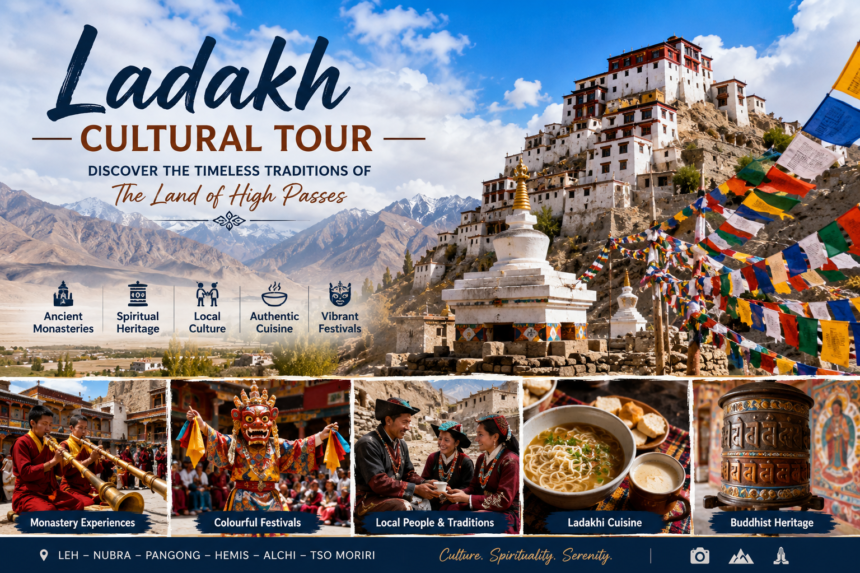
Nestled amidst the majestic Himalayas, Ladakh is much more than a destination of rugged mountains and crystal-clear lakes. It is a land where ancient Buddhist traditions, centuries-old monasteries, colourful festivals, and warm-hearted communities come together to create a truly unforgettable cultural experience. A Ladakh Cultural Tour offers travellers the opportunity to discover the rich heritage, spiritual essence, and unique lifestyle of one of India’s most fascinating regions.
From prayer flags fluttering in the mountain breeze to monks chanting in peaceful monasteries, every moment in Ladakh reflects a deep connection between nature, faith, and tradition.
Why Choose a Ladakh Cultural Tour?
A cultural tour of Ladakh allows visitors to experience the region beyond its breathtaking landscapes. You’ll explore ancient monasteries, interact with local communities, witness traditional ceremonies, taste authentic Ladakhi cuisine, and learn about customs that have remained unchanged for centuries.
Whether you’re a history enthusiast, photographer, spiritual seeker, or curious traveller, Ladakh offers an enriching journey through one of the world’s most unique mountain cultures.
Top Cultural Attractions in Ladakh
Hemis Monastery
One of the largest and wealthiest monasteries in Ladakh, Hemis Monastery is famous for its stunning architecture, ancient Buddhist relics, and vibrant annual Hemis Festival. The monastery houses beautiful murals, sacred thangkas, and a remarkable collection of religious artefacts.
Visitors often witness monks performing traditional mask dances that symbolise the victory of good over evil.
Thiksey Monastery
Perched atop a hill overlooking the Indus Valley, Thiksey Monastery resembles the Potala Palace of Tibet. It is home to a magnificent 15-metre-high statue of Maitreya Buddha, prayer halls, ancient scriptures, and breathtaking panoramic views.
Early morning prayers offer visitors a peaceful and deeply spiritual experience.
Diskit Monastery
Located in the Nubra Valley, Diskit Monastery is the oldest monastery in the region. Its towering statue of Maitreya Buddha overlooks the valley and represents peace and harmony.
The monastery offers spectacular views of sand dunes, mountains, and the Shyok River.
Alchi Monastery
Unlike most hilltop monasteries, Alchi Monastery is situated on flat ground and is renowned for its beautifully preserved wall paintings, intricate wood carvings, and Kashmiri-influenced artwork dating back nearly a thousand years.
It is considered one of Ladakh’s greatest artistic treasures.
Leh Palace
Overlooking the town of Leh, the 17th-century Leh Palace was once the royal residence of the Namgyal dynasty. Visitors can explore ancient rooms, royal artefacts, prayer halls, and terraces offering panoramic views of Leh and the surrounding mountains.
Experience Ladakhi Villages
One of the highlights of a cultural tour is visiting traditional Ladakhi villages such as:
- Shey
- Stok
- Basgo
- Turtuk
- Hemis Shukpachan
- Uleytokpo
Travellers can interact with local families, observe traditional farming methods, visit centuries-old homes, and experience genuine Ladakhi hospitality through village homestays.
Witness Colourful Festivals
Ladakh is famous for its vibrant Buddhist festivals, where monasteries come alive with music, dance, and elaborate ceremonies.
Popular festivals include:
- Hemis Festival
- Losar (Ladakhi New Year)
- Dosmoche Festival
- Phyang Festival
- Takthok Festival
- Sindhu Darshan Festival
Traditional Cham mask dances performed by monks are among the most captivating cultural experiences in the region.
Traditional Ladakhi Cuisine
Food plays an important role in Ladakh’s culture. Some must-try local dishes include:
- Thukpa (Noodle Soup)
- Skyu (Traditional Wheat Pasta)
- Momos
- Tingmo (Steamed Bread)
- Chhurpi (Yak Cheese)
- Butter Tea (Gur Gur Chai)
- Khambir Bread
- Apricot Jam
- Local Barley Beer (Chang)
Many village homestays offer authentic homemade meals prepared using locally grown ingredients.
Local Arts and Handicrafts
Ladakh is well known for its skilled artisans who produce:
- Pashmina Shawls
- Handwoven Woollen Carpets
- Prayer Wheels
- Tibetan Jewellery
- Thangka Paintings
- Wooden Carvings
- Silver Ornaments
- Handmade Pottery
Shopping from local artisans supports traditional craftsmanship and local communities.
Best Time for a Cultural Tour
The ideal time to explore Ladakh’s cultural heritage is from May to September, when roads are open and the weather is pleasant.
This period also coincides with many of Ladakh’s colourful festivals and cultural events.
How to Reach
By Air
Leh’s Kushok Bakula Rimpochee Airport is well connected to Delhi, Srinagar, Chandigarh, and several major Indian cities.
By Road
Travellers can drive to Ladakh via:
- Manali–Leh Highway
- Srinagar–Leh Highway
Both routes offer spectacular Himalayan scenery and are popular among road-trip enthusiasts.
Travel Tips
- Spend at least two days acclimatising to Ladakh’s high altitude before extensive sightseeing.
- Dress modestly while visiting monasteries and religious sites.
- Always ask permission before photographing monks or local residents.
- Respect local customs and maintain silence inside prayer halls.
- Carry warm clothing, even during summer, as temperatures can drop significantly.
- Drink plenty of water and avoid strenuous activity on your first day.
Why You Should Experience a Ladakh Cultural Tour
A Ladakh Cultural Tour is more than just a holiday—it’s a journey into one of the world’s oldest living Buddhist cultures. From peaceful monasteries and centuries-old traditions to welcoming villages and colourful festivals, Ladakh offers an experience that touches both the mind and soul.
As you travel through dramatic mountain landscapes, hear the gentle chants of monks, spin ancient prayer wheels, and share conversations with local families, you’ll discover that the true beauty of Ladakh lies not only in its scenery but also in its rich cultural heritage.
For travellers seeking meaningful experiences beyond sightseeing, a Ladakh Cultural Tour promises memories that will last a lifetime.